
2025 Fraud Training Seminar - May 15-16, 2025
May 15, 2025 7:30 AM CDT to May 16, 2025 4:30 PM CDT
Add to Calendar
The Scott Conference Center
6450 Pine St
Omaha, NE 68106
Venue website
Directions
Attention: This year's conference will be held at the Scott Conference Center and there will be limited seating for Virtual attendance. We will only sell 200 Virtual Tickets so please get them early.
Please take advantage of our member pricing by joining the ACFE Heartland Chapter today before you register! You can join or renew your membership here.
Please register online. You may pay online or mail a check to Heartland ACFE Chapter, PO Box 460726, Papillion, NE 68046. Group registrations can be done online by adding multiple tickets to your order. If you would like to renew your group membership and register that same group for the seminar, please contact [email protected]. We are again offering the buy 5 tickets, get one free discount (of equal or lesser value). Your free ticket should be the lowest priced ticket in your group.
If you are paying by check, your check MUST be received by April 17, 2025.
Tickets for 2025 are either live or virtual. We are not offering one-day registrations this year.
Early registration deadline is March 31, 2025 ! Register by March 31, 2025 and save $50!!
Final registration deadline is April 30, 2025!
Questions? Contact [email protected]
Thursday, May 15 - Morning Presentation 7:30 am CST - 10:30 am CST
John Fick, MLS, CFE, CFCI, CECFE
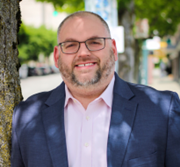
John R. Fick III, MLS, CFE, CFCI, CECFE, serves as the Director of Fraud for Northwest Bank, providing over 20 years of comprehensive experience in fraud operations, including fraud detection, investigations, and physical security. Throughout his distinguished career, John has worked with a spectrum of financial institutions, ranging from small regional banks to large national corporations across the United States.
John's expertise lies in the development and strengthening of fraud departments, where he employs a strategic approach and deep comprehension of organizational needs and risk factors. He excels in personnel management, fostering a culture of success, and conducting intricate investigations aimed at mitigating and recovering financial losses.
Recognized for his leadership qualities, John embodies empowerment, effective communication, adaptability, integrity, problem-solving, collaboration, partnership, personnel development, and mentorship. His leadership style is characterized by a commitment to fostering professional growth and facilitating collaborative solutions.
John's dedication to professional development is underscored by his attainment of three esteemed certifications: Certificated Financial Crimes Investigator (CFCI), Certified Fraud Examiner (CFE), and Certified Economic Crime Forensic Examiner (CECFE). Furthermore, he holds a Bachelor of Science degree in Organizational Security and Management with honors, along with a Master’s in Legal Studies from Northeastern University School of Law.
With an unwavering commitment to excellence and a demonstrated track record of leadership, John continues to be a driving force in the field of fraud prevention and financial crimes investigation. His multifaceted expertise and dedication to advancing industry standards make him an invaluable asset in safeguarding financial institutions against fraudulent activities.
Takeaways:
- Understand Check Fraud Basics: Understand the check processing process through the Federal Reserve, identify common types of check fraud, including forgery, counterfeiting, and check kiting, and recognize key best practices to prevent fraudulent checks.
- Explain ACH Fraud Fundamentals: Describe how Automated Clearing House (ACH) transactions work, recognize typical fraud schemes targeting ACH systems, and apply best practices for preventing and detecting unauthorized transactions.
- Recognize Wire Transfer Fraud: Understand the wire transfer process, identify common wire fraud tactics such as business email compromise (BEC) scams, and implement controls to mitigate the risk of fraudulent wire transfers.
- Identify ATM Fraud Techniques: Explain the functionality of ATMs, recognize common fraud schemes such as skimming and card cracking schemes, and apply measures to protect ATM transactions and infrastructure.
- Apply Key Banking Regulations: Understand essential banking regulations related to banks and fraud prevention and detection, including the Bank Secrecy Act (BSA), Regulation CC, Regulation E, and the Uniform Commercial Code (UCC), and ensure compliance in fraud investigation and prevention efforts.
Participants will earn 1.5 CPE
Prerequisites: There are no prerequisites for this session.
Advanced Preparation: None
Program Level: Basic
Delivery Method: Group Live Base & Group Internet Based
This presentation will equip participants with essential knowledge of digital fraud threats, including identity theft, various types of phishing (email, SMS, voice, and spear phishing), SIM swap scams, and injection attacks such as SQL and code injections. Attendees will learn to recognize these threats, understand how they are executed, and implement effective strategies to prevent, detect, and respond to digital fraud in both personal and professional settings.
Takeaways:
- Understand Identity Theft: Define identity theft, recognize common methods used by fraudsters to steal personal information, and identify warning signs of potential identity theft incidents.
- Identify Different Types of Phishing Attacks: Explain the various types of phishing attacks, including email phishing, smishing (SMS phishing), vishing (voice phishing), and spear phishing, and understand how each method is used to exploit victims.
- Recognize SIM Swap Fraud: Describe the SIM swap attack process, understand how fraudsters gain control of victims’ mobile numbers, and identify key red flags that indicate a potential SIM swap attempt.
- Analyze Injection Attacks: Define injection attacks such as SQL injection and code injection, understand how they exploit vulnerabilities in digital systems, and identify preventive measures to mitigate these attacks.
- Implement Prevention and Response Strategies: Develop and implement effective strategies to prevent, detect, and respond to digital fraud threats, ensuring the protection of sensitive data and systems in both personal and professional settings.
This presentation will equip attendees with the knowledge and tools necessary to recognize, prevent, and respond to common digital fraud schemes.
Participants will earn 1.5 CPE
Field of Study: Specialized Knowledge - Technical
Prerequisites: There are no prerequisites for this session.
Advanced Preparation: None
Program Level: Basic
Delivery Method: Group Live Base & Group Internet Based
Thursday, May 15 - Morning/Afternoon Presentation 10:30 am CST - 11:30 am CST & 12:30 pm CST - 2:30 pm CST
Aaron Frye, Founder & CEO Lucid Point Consulting
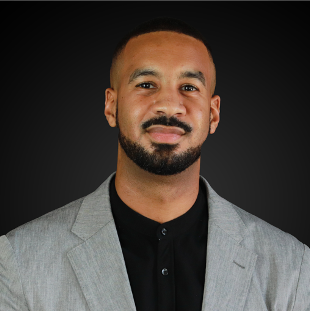
Prior to launching Lucid Point Consulting (LPC), a risk advisory firm that specializes in fraud & identity risk, payments risk, and vendor management initiatives, Aaron worked directly in multiple fraud & payments risk functions for GE Capital, SunTrust Bank (now Truist Bank), BBVA USA, PNC Bank, and Swivel, a payment processor. He started the risk advisory firm with one goal – enhance their client’s organizations by applying practical industry experience to reduce risk exposure and losses. LPC also offers Sales Consulting services tailored for fraud & identity risk solution providers.
Title: Fraud Risk Orgs & Controls Overview
You will learn how different fraud risk functions are structured, managed differently, and an overview of fraud verification, authentication, and risk scoring controls.
Takeaways:
- Overview of Fraud vs AML vs Cyber functions and how they “Manage Fraud” differently.
- Overview of Verification vs Authentication vs Risk Scoring controls.
Participants will earn 1 CPE
Field of Study: Management Services - Technical
Prerequisites: There are no prerequisites for this session.
Advanced Preparation: None
Program Level: Basic
Delivery Method: Group Live Base & Group Internet Based
Title: Fraud Risk Regulation Challenges
You will learn about the current fraud regulations, gaps in regulations, and how they impact the misclassification of fraud exposure and losses.
Takeaways:
- Overview of regulation gaps in fraud risk management.
- Fraud Misclassification Issues
Participants will earn 1 CPE
Field of Study: Management Services - Technical
Prerequisites: There are no prerequisites for this session.
Advanced Preparation: None
Program Level: Basic
Delivery Method: Group Live Base & Group Internet Based
Title: Fraud Vendor Selections & Management
You will learn about the best practices of selecting a fraud risk related vendor for your organization, as well as best practices for managing these unique service providers.
Takeaways:
- Fraud Vendor Sourcing Best Practices.
- Fraud Vendor Management Best Practices.
Participants will earn 1 CPE
Field of Study: Management Services - Technical
Prerequisites: There are no prerequisites for this session.
Advanced Preparation: None
Program Level: Basic
Delivery Method: Group Live Base & Group Internet Based
Thursday, May 15 - Afternoon Presentation 2:30 pm CST - 4:30 pm CST
Mason Wilder, CFE, Research Director, ACFE

Mason Wilder is the research director for the ACFE. In this role, he oversees the creation and updates of all ACFE training and education materials, the planning and organization of all live training event programs, and research initiatives such as the Report to the Nations and benchmarking reports. He also conducts trainings, delivers presentations, writes for ACFE publications, and responds to member and media inquiries.
Prior to joining the ACFE, Wilder worked in corporate security intelligence and investigations at several companies over a decade, specializing in background and due diligence investigations, as well as intelligence analysis for international physical security operations and crisis response. He is a former licensed private investigator and earned his bachelor’s degree in journalism from the University of Texas at Austin.
Title: Generative AI: An Increasing Threat with Wide-Ranging Fraud Implications
The rapid development of generative artificial intelligence has prompted many well-founded and wide-ranging concerns for society, including implications for the anti-fraud profession. This presentation will cover the current capabilities of generative AI technology, how fraudsters are using it to enhance some of the costliest fraud schemes—including business email compromise and pig butchering—affecting individuals and organizations today, as well as strategies for mitigating the risks posed by these schemes.
Takeaways:
- Recognize fraud applications of generative artificial intelligence technologies
- Identify controls that can mitigate risks associated with fraud schemes that incorporate generative artificial intelligence
Participants will earn 2 CPEs
Field of Study: Information Technology - Technical
Prerequisites: There are no prerequisites for this session.
Advanced Preparation: None
Program Level: Basic
Delivery Method: Group Live Base & Group Internet Based
Friday, May 16 - Morning Presentation 7:30 am CST - 11:30 am CST
Brett Johnson. Former US Most Wanted Cybercriminal. Now Good Guy.
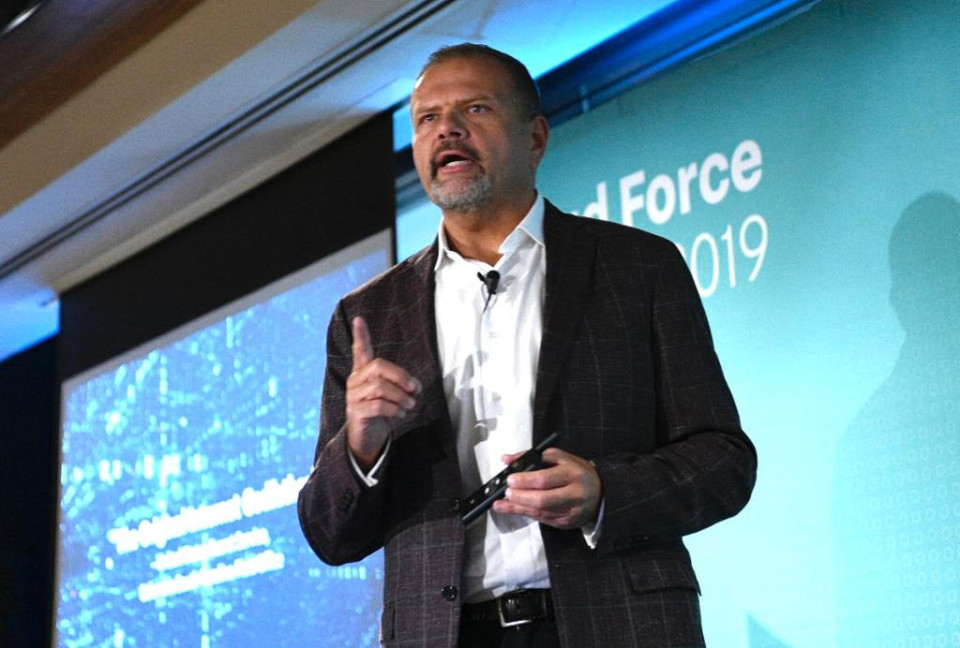
The United States Secret Service called Mr. Johnson "The Original Internet Godfather" for his role in refining modern financial cybercrime.
Or to put it another way: Brett was convicted of 39 felonies, placed on the US Most Wanted List, escaped from prison, and...he built the first organized cybercrime community, Shadowcrew. Shadowcrew was a precursor to today's darknet and darknet markets and it laid the foundation for the way modern cybercrime channels operate today.
Johnson was sentenced to 90 months in Federal Prison. End of story?
Not hardly.
Brett found redemption through his sister, his wife Michele, and finally the FBI. He was given the chance to turn his life around. He took it.
Today, Brett is considered one of the leading authorities on cybercrime, identity theft, and cybersecurity on the planet.
He works hard to protect businesses and consumers from the type of person he used to be.
And yes, he takes that shit seriously.
Title: Can a Criminal Reform?
Former US Most Wanted Cybercriminal, Brett Johnson, discusses his criminal past and what living a "Criminal Lifestyle" means. Brett also discusses the reality and difficulties of turning his life around as the presentation morphs into an open forum discussion where attendees can ask whatever pointed questions they may have with nothing being off limits.
Takeaways:
- Determine how cybercriminals differ from occupational fraudsters.
- Recognize how organizations and individuals can help protect themselves from cyberfraud.
- Recognize motivations and rationalizations for fraud.
- Identify how organizations are vulnerable to cyberfraud.
- Recall why online fraud is so prevalent.
Participants will earn 2 CPE
Field of Study: Behavioral Ethics - Non-Technical
Prerequisites: There are no prerequisites for this session.
Advanced Preparation: None
Program Level: Basic
Delivery Method: Group Live Base & Group Internet Based
Title: Cybercrime 101
Cybersecurity and Cybercrime Expert, Brett Johnson, walks through the dynamics of online crime:
-Who the attackers are
-Why do they attack
-What are they looking for
-How are targets picked
-What creates the threat landscape
-What are the most common types of attacks
-How do online criminal communities function
-What do you need to do to protect you or your organization
Questions are also welcome throughout the presentation to better serve the needs of the attendees
Takeaways:
- Three Necessities of Cybercrime
- Inherent Traits of Attackers
- Cybercrime is not Rocket Science. The threat landscape.
- The necessity of trust in Cybercrime Environments and with potential victims.
Participants will earn 1.5 CPE
Field of Study: Information Technology - Technical
Prerequisites: There are no prerequisites for this session.
Advanced Preparation: None
Program Level: Basic
Delivery Method: Group Live Base & Group Internet Based
Title: Here there be monsters--Visiting Telegram and the Darkweb
Brett Johnson takes attendees on a live tour of the most popular Telegram and Darkweb criminal channels. Learn how the environments function, how they grow, how trust is established and more.
Takeaways:
- Most popular online crimes and how they are committed.
- Synthetic Fraud.
- First Party Fraud (Refund Fraud)
- Stealing Session Tokens
Participants will earn 1 CPE
Field of Study: Information Technology - Technical
Prerequisites: There are no prerequisites for this session.
Advanced Preparation: None
Program Level: Basic
Delivery Method: Group Live Base & Group Internet Based
Friday, May 16 - Afternoon Presentation 12:30 pm CST - 3:30 pm CST
John Grimes III
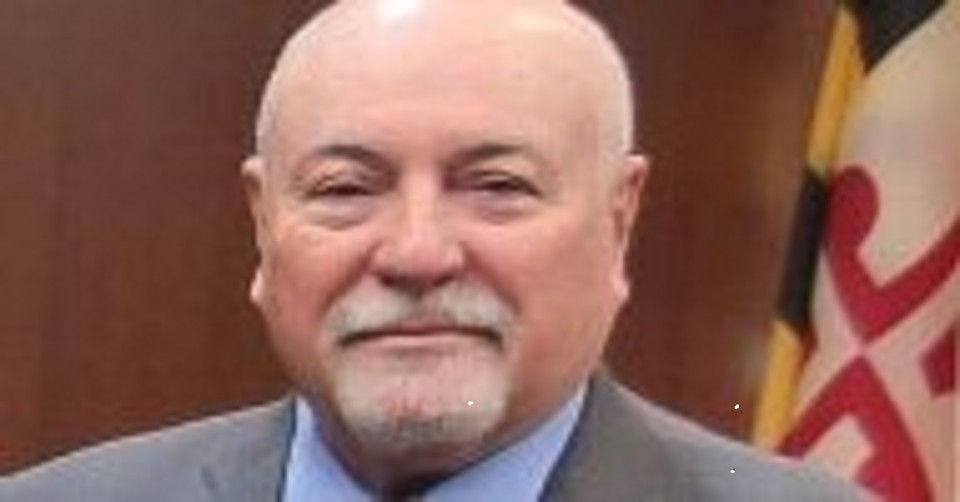
John began his law enforcement career in 1968 at the age of eighteen with the Baltimore City Police Department as a Police Cadet. Upon completion of the Academy, where he was class valedictorian, John worked patrol then served as a Detective in the Criminal Investigation Division (CID). John left the BPD and joined the Amtrak Police Department. He became a Special Agent in the newly formed Fraud and Organized Crime Unit and was later promoted to Captain of the CID. In 1993, John joined the Amtrak Office of Inspector General/Office of Investigations (OIG/OI). In 1999, he was appointed Chief Inspector. John retired from the OIG in 2016.
After 26 years, John retired as a Certified Fraud Examiner. As a CFE, he served as a Board member and President of the Maryland Chapter. During his term as President, the Maryland Chapter was the honored recipient of the 2015 ACFE Chapter of the Year Award. John was also honored as the recipient of the ACFE Maryland Chapter 2020 Fraud Fighter of the Year Award. In addition, John received the Certified Forensic Interviewer (CFI) designation offered by the Center for Interviewer Standards and Assessment, Ltd. As a CFE and CFI, John provided training on forensic interviewing and fraud investigations to private, professional, and government entities. John presented at many ACFE events including the 27th annual ACFE Global Fraud Conference.
For ten years, John served as an Adjunct Professor of Forensic Studies at Stevenson University, Owings Mills, MD where he developed and taught the graduate level Investigative Interviewing course with a fraud examination component. John retired from his position in May 2023. John was honored as the 2015 Keynote Speaker for the 2015 Stevenson University School of Graduate and Professional Studies Commencement. He was also a founding member of Stevenson University’s Center for Forensic Excellence.
In 2021, John authored the textbook, Investigative Interviewing, Adopting a Forensic Mindset, published by CRC Press. The book, used in the Investigative Interviewing course at Stevenson University, is available through the ACFE Book Store as well as the usual book sellers.
Furthermore, John served as a Division Staff Officer with the United States Coast Guard Auxiliary where he was recognized as an Instructor Specialist, Marine Safety and Environmental Protection Specialist, and Assistant Harbor Safety Specialist.
John holds an MS in Forensic Studies from Stevenson University, a BA in Business with an emphasis in Accounting from the Notre Dame of Maryland University, and an AA in Criminal Justice from the Community Colleges of Baltimore County, MD. In addition, John is a 1987 graduate of the New England Institute of Law Enforcement Management Command Training Center at Babson College, Wellesley, MA.
John has received numerous awards and commendations throughout his career including the 2006 Amtrak President’s Award for Valor due to his and his unit’s participation in the Federal Law Enforcement response to the Gulf Region in the aftermath of Hurricane Katrina.
Title:
The presentation will discuss what it means for a practitioner to adopt a forensic mindset to conduct legal and ethical interviews that can withstand the scrutiny of the courts and other tribunals, as well as the public. The main objective of an investigative interview is to obtain the truth. In pursuit of the truth, the investigator or auditor must prepare for the interview, which begins when a person is identified as someone who needs to be interviewed in pursuit of an investigation or audit. In this regard, the interviewee should be properly classified as to their role or possible role in the matter being investigated or audited to determine the interview approach as well as the interview objectives.
The presentation will examine reasons an interviewee might not be forthcoming and how an interviewer can detect if an interviewee is being truthful or less than truthful. In this regard, the presentation will explore methods to break down barriers and gain trust with a reluctant or hostile interviewee. Furthermore, understanding the offender and the reasons they violate policy or commit fraudulent acts will be discussed. This understanding assists with the interview objective of obtaining a truthful admission or confession of wrongdoing if appropriate. The presentation will provide a step-by-step interview approach including how to arrange an interview, providing an introductory statement, and offering an appropriate opening statement dependent on the interviewee’s classification. In addition, interviewer responses to overcome interviewee objections and evaluating and handling interviewee denials will be explored. Finally, the presentation will examine methods an interviewee can lead an interviewee to the truth.
Takeaways:
- Investigative Interview vs. Interrogation
- Private Sector Confessions
- The Human Factor
- Breaking Down Barriers and Gaining Trust
- The Interview
- End and Evaluate the Interview
Participants will earn 3 CPE
Field of Study: Communications & Marketing - Non-Technical
Prerequisites: There are no prerequisites for this session.
Advanced Preparation: None
Program Level: Basic
Delivery Method: Group Live Base & Group Internet Based
Friday, May 16 - Afternoon Presentation 3:30 pm CST - 4:30 pm CST
Kevin Kohler, FBI Special Agent
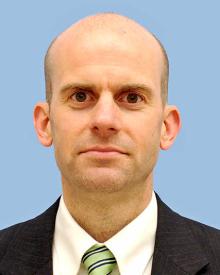
Kevin Kohler has been an FBI Special Agent for more than 25 years. He investigates a wide range of federal crimes with an emphasis on fraud matters, including embezzlements, bank fraud, money laundering, investment fraud, and public corruption. He is a member of the FBI’s Financial Crimes Response Team, which assists on complex financial investigations nationwide. Kevin is originally from Oregon. He obtained bachelor's and master's degrees in accounting from Brigham Young University (BYU) in Provo, Utah. He has been a licensed CPA since 1997. Prior to the FBI, he worked in public accounting for Deloitte & Touche in Minneapolis. He currently lives in the Des Moines area with his wife and three children.
Title: Paul Bradford: Tornado, Kickbacks, and Obstruction
Paul Bradford was hired by a large Iowa corporation to manage a re-build of its manufacturing plants, but unbeknownst to his new employer he had a history of self-dealing. This case presentation will explore how Bradford’s fraudulent activity was discovered and investigated. It will explore the risks of vendor kickbacks and what could happen when too much approval authority is concentrated in a single individual.
Takeaways:
- Preventing and detecting employee fraud.
- Importance of careful hiring decisions.
- Perils of vendor approval authority concentrated in one individual.
- Use of sophisticated investigative techniques.
Participants will earn 1 CPE
Field of Study: Auditing-Technical
Prerequisites: There are no prerequisites for this session.
Advanced Preparation: None
Program Level: Basic
Delivery Method: Group Live Base & Group Internet Based
 Heartland ACFE Chapter is registered with the National Association of State Boards of Accountancy (NASBA) as a sponsor of continuing professional education on the National Registry of CPE Sponsors. State boards of accountancy have final authority on the acceptance of individual courses for CPE credit. Complaints regarding registered sponsors may be submitted to the National Registry of CPE Sponsors through its website: www.nasbaregistry.org.
Hotel Information
Residence Inn Omaha
Aksarben Village
1717 S. 67th St.
Omaha, NE 68106
Book by April 16, 2025 to get the ACFE Heartland Group Rate of $184 per night.
Book your group rate for ACFE Heartland Chapter online by clicking here or calling 1-888-236-2427 and requesting the ACFE Heartland Group Rate.
I understand seating is not guaranteed until payment is received in full. I also understand that in order to receive a refund, I must cancel by no later than May 1, 2025. For more information regarding administrative policies for complaints or refunds, please click here or contact us at: [email protected].
Tickets
$500.00 Live/In Person Non-Member Ticket
$450.00 Earlybird rate before April 1
$340.00 Student Ticket
$290.00 Earlybird rate before April 1
$0.00 6th Member Free (lowest cost ticket)
$340.00 Live/In Person Member Ticket
$290.00 Earlybird rate before April 1
$250.00 Virtual Member Ticket
$200.00 Earlybird rate before April 1
$325.00 Virtual Non-Member Ticket
$275.00 Earlybird rate before April 1
Documents
John Fick - Banking & Fraud 101 – Understanding Bank Operations and Fraud Risks
John Fick - Digital Deception: Unmasking Modern Fraud Tactics and Defenses
Mason Wilder - Generative AI: An Increasing Threat with Wide-Ranging Fraud Implications
John Grimes III - Investigative Interviewing, Adopting A Forensic Mindset
